Light Spring Vegetable Broth
Highlighted under: Fresh Living Plates
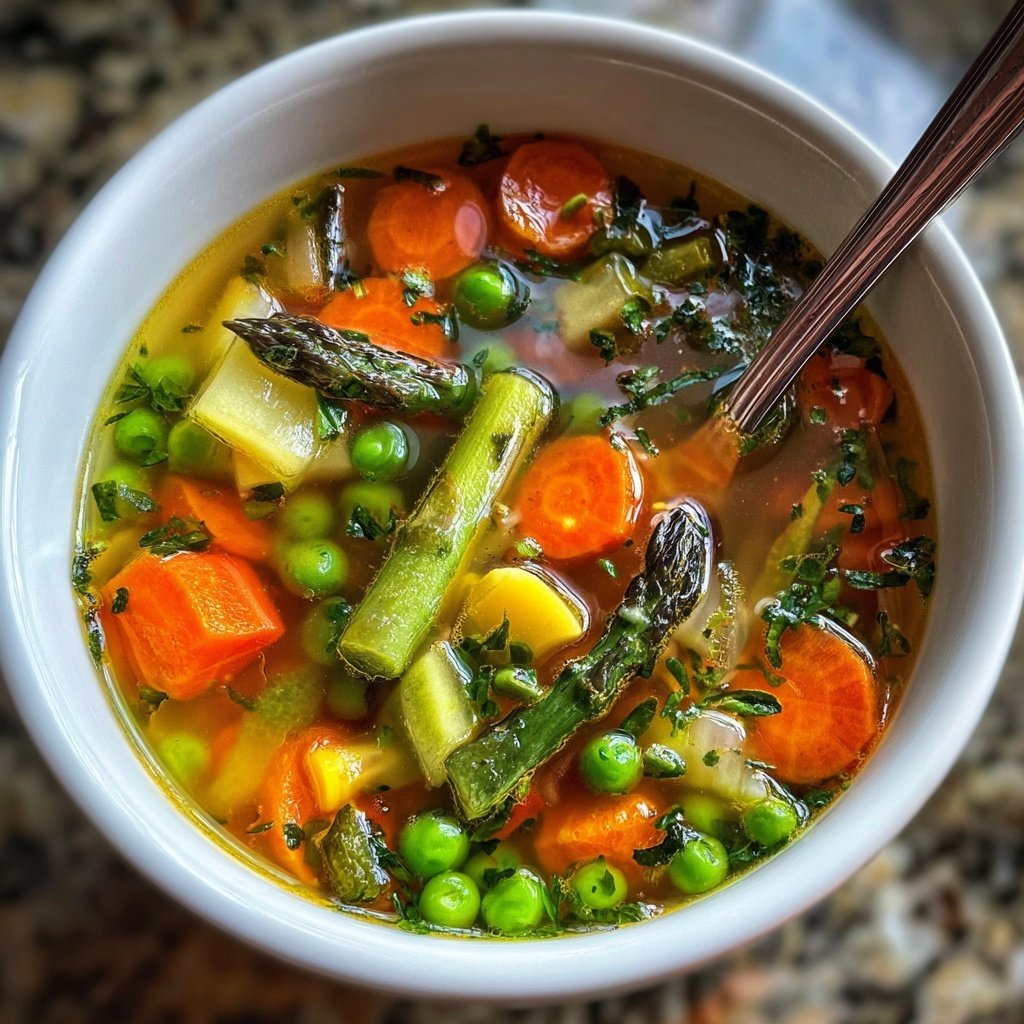
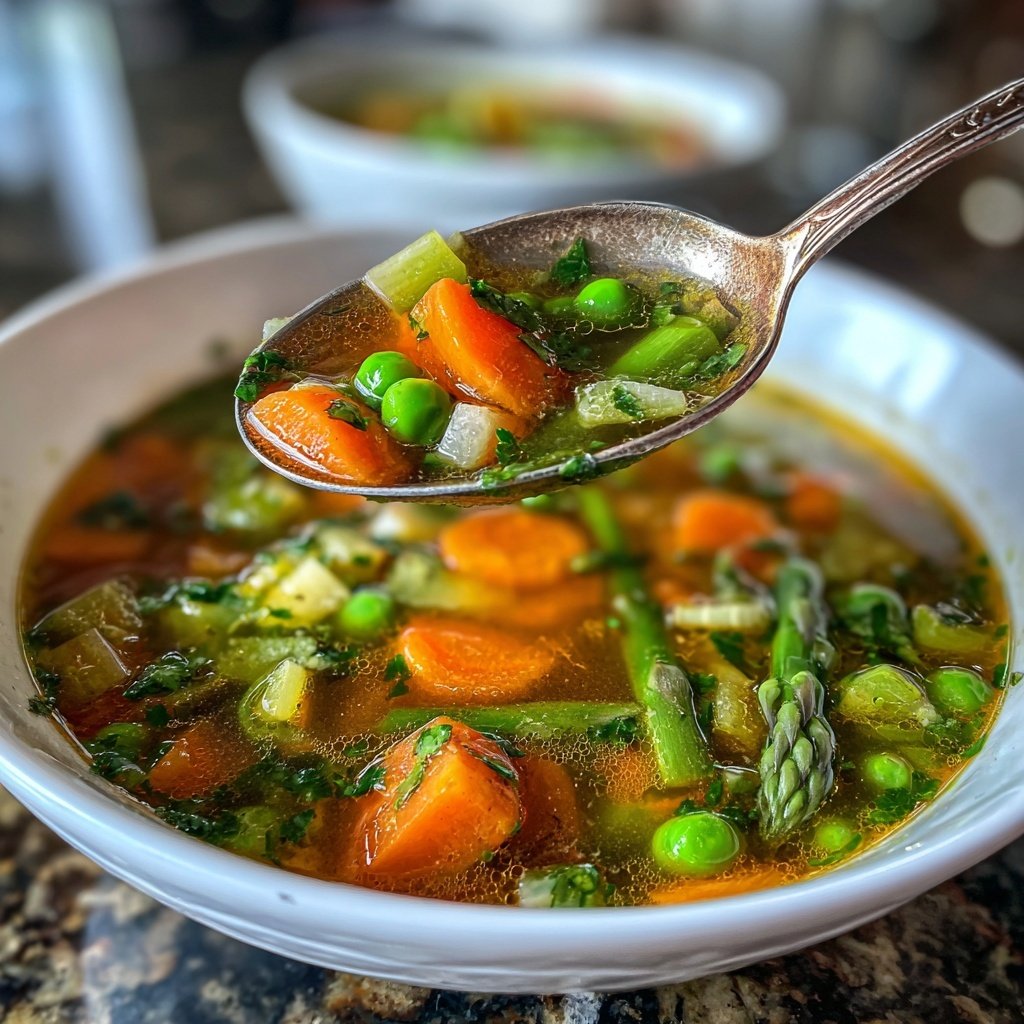
I love making this Light Spring Vegetable Broth during the spring when fresh vegetables are at their peak. The vibrant colors and flavors of seasonal vegetables truly shine in this broth. With just a handful of ingredients, I find it to be a refreshing and nourishing option, perfect for a light meal or as a base for other dishes. Plus, it’s a great way to use up any leftover veggies in my fridge, making it both economical and environmentally friendly.
When I first tried making vegetable broth, I experimented with various herbs and veggies to find the right balance. The key I discovered is to use seasonal vegetables, which impart the freshest flavors and aromas. I love adding herbs like dill and parsley, which really elevate the broth's taste.
One specific tip I learned is to sauté the vegetables before adding water, as this enhances their flavors and helps release their natural sweetness. This method has transformed my broth from a simple dish into a delightful and aromatic experience every time.
Why You Will Love This Recipe
- Fresh and vibrant flavors from seasonal vegetables
- Light yet satisfying, perfect for anytime hunger
- Easy to customize with your favorite herbs and spices
Understanding Flavor Profiles
The foundation of this Light Spring Vegetable Broth lies in the balance of flavors contributed by each vegetable. The sweetness of carrots and the earthiness of celery blend harmoniously with the aromatic qualities of garlic and onion. When sautéed, these vegetables caramelize slightly, enhancing their natural sweetness and depth. Pay attention to this initial step; a good sauté can significantly elevate the broth, producing a fragrant base that packs a flavorful punch.
Using fresh vegetables is crucial for maximizing flavor. Look for vibrant, crisp options at your local market. If you notice wilted or dull-colored veggies, opt for something else. And don’t hesitate to swap out vegetables based on availability—leeks can replace onions for a milder taste, or other seasonal greens like spinach could complement the broth’s freshness.
Serving and Storage Suggestions
This broth makes for a lovely standalone dish or a base for other meals. You can serve it as a light starter or pair it with crusty bread for a balanced lunch. To enhance the dish, consider adding a sprinkle of fresh lemon juice or a dash of hot sauce just before serving for a bright, zesty kick. My favorite addition is a touch of grated Parmesan cheese, which adds creaminess without overpowering the vegetable flavors.
For make-ahead options, store the broth in an airtight container in the refrigerator for up to four days. If you’re looking to keep it longer, freeze the broth in portions using ice cube trays or freezer bags. This way, you can easily pull out just the right amount when needed. To reheat, gently warm it on the stove over low heat, stirring occasionally to ensure even heating.
Ingredients
For the Broth
- 1 tablespoon olive oil
- 1 onion, chopped
- 2 carrots, sliced
- 2 celery stalks, sliced
- 2 cloves garlic, minced
- 1 zucchini, chopped
- 1 cup green beans, trimmed and cut
- 4 cups vegetable broth
- 1 teaspoon dried thyme
- 1 bunch fresh parsley, chopped
- Salt and pepper to taste
Preparation
Steps
Sauté the Vegetables
In a large pot, heat the olive oil over medium heat. Add the chopped onion, carrots, and celery, and sauté for about 5 minutes until the vegetables begin to soften.
Add Garlic and Zucchini
Stir in the minced garlic and chopped zucchini, cooking for an additional 3 minutes until fragrant.
Incorporate Broth and Seasonings
Pour in the vegetable broth, add the green beans, thyme, and season with salt and pepper. Bring the mixture to a boil, then reduce heat and let it simmer for 20 minutes.
Finish with Fresh Herbs
Once the vegetables are tender, stir in the chopped parsley. Adjust seasoning as necessary before serving.
Serving Suggestions
Pro Tips
- Feel free to add any other seasonal vegetables you have on hand, such as peas or asparagus, to make the broth even more vibrant. For an added layer of flavor, consider adding a splash of soy sauce or lemon juice when serving.
Ingredient Substitutions
Don’t hesitate to explore different vegetable combinations in this broth. If you have excess bell peppers or mushrooms, they can add a great flavor twist. However, avoid using starchy vegetables like potatoes, which can alter the light texture of the dish. For an even lighter broth, try using spiralized vegetables instead of traditional ones; zucchini noodles add a fun twist and increase nutrient content.
For a herbaceous boost, consider adding fresh or dried herbs like basil or dill along with the thyme. Each herb brings its unique aroma and complements the spring vegetables beautifully. If you're looking to make the broth heartier without extra calories, a handful of leafy greens like kale or spinach can be added during the last few minutes of cooking for added nutrition.
Troubleshooting Common Issues
If the broth turns out too salty, you can balance it by adding extra water or additional vegetables. Simply chop a few more veggies, cook them briefly in water, and then combine them with the broth. This not only dilutes the saltiness but also enriches the broth's flavor without sacrificing texture.
Alternatively, if the broth lacks depth, enhance it with a splash of soy sauce or a hint of miso paste during the simmering process. These ingredients can bring umami flavor without overwhelming the fresh vegetable essence you want to maintain in this light broth.
Questions About Recipes
→ Can I use frozen vegetables?
Yes, frozen vegetables can also be used, though always remember to adjust cooking times as they may be softer.
→ How long can I store the broth?
You can store the broth in the refrigerator for up to 3 days or freeze it for up to 3 months.
→ Is this broth gluten-free?
Yes, as long as you use a gluten-free vegetable broth, this recipe is naturally gluten-free.
→ Can I make this broth in a slow cooker?
Absolutely! Simply sauté the vegetables and then transfer them to a slow cooker with the broth and seasonings. Cook on low for 6-8 hours.
Light Spring Vegetable Broth
Created by: Ottilie James
Recipe Type: Fresh Living Plates
Skill Level: Beginner
Final Quantity: 4 servings
What You'll Need
For the Broth
- 1 tablespoon olive oil
- 1 onion, chopped
- 2 carrots, sliced
- 2 celery stalks, sliced
- 2 cloves garlic, minced
- 1 zucchini, chopped
- 1 cup green beans, trimmed and cut
- 4 cups vegetable broth
- 1 teaspoon dried thyme
- 1 bunch fresh parsley, chopped
- Salt and pepper to taste
How-To Steps
In a large pot, heat the olive oil over medium heat. Add the chopped onion, carrots, and celery, and sauté for about 5 minutes until the vegetables begin to soften.
Stir in the minced garlic and chopped zucchini, cooking for an additional 3 minutes until fragrant.
Pour in the vegetable broth, add the green beans, thyme, and season with salt and pepper. Bring the mixture to a boil, then reduce heat and let it simmer for 20 minutes.
Once the vegetables are tender, stir in the chopped parsley. Adjust seasoning as necessary before serving.
Extra Tips
- Feel free to add any other seasonal vegetables you have on hand, such as peas or asparagus, to make the broth even more vibrant. For an added layer of flavor, consider adding a splash of soy sauce or lemon juice when serving.
Nutritional Breakdown (Per Serving)
- Calories: 90 kcal
- Total Fat: 4g
- Saturated Fat: 1g
- Cholesterol: 0mg
- Sodium: 540mg
- Total Carbohydrates: 14g
- Dietary Fiber: 3g
- Sugars: 4g
- Protein: 3g